Calm Leadership in Turbulent Times
ISSUE 1
I have spent the last two decades working alongside people who chose careers in service such as behavioral health, workforce development, and other safety-net services in the community. The work is meaningful, and the stakes are real.
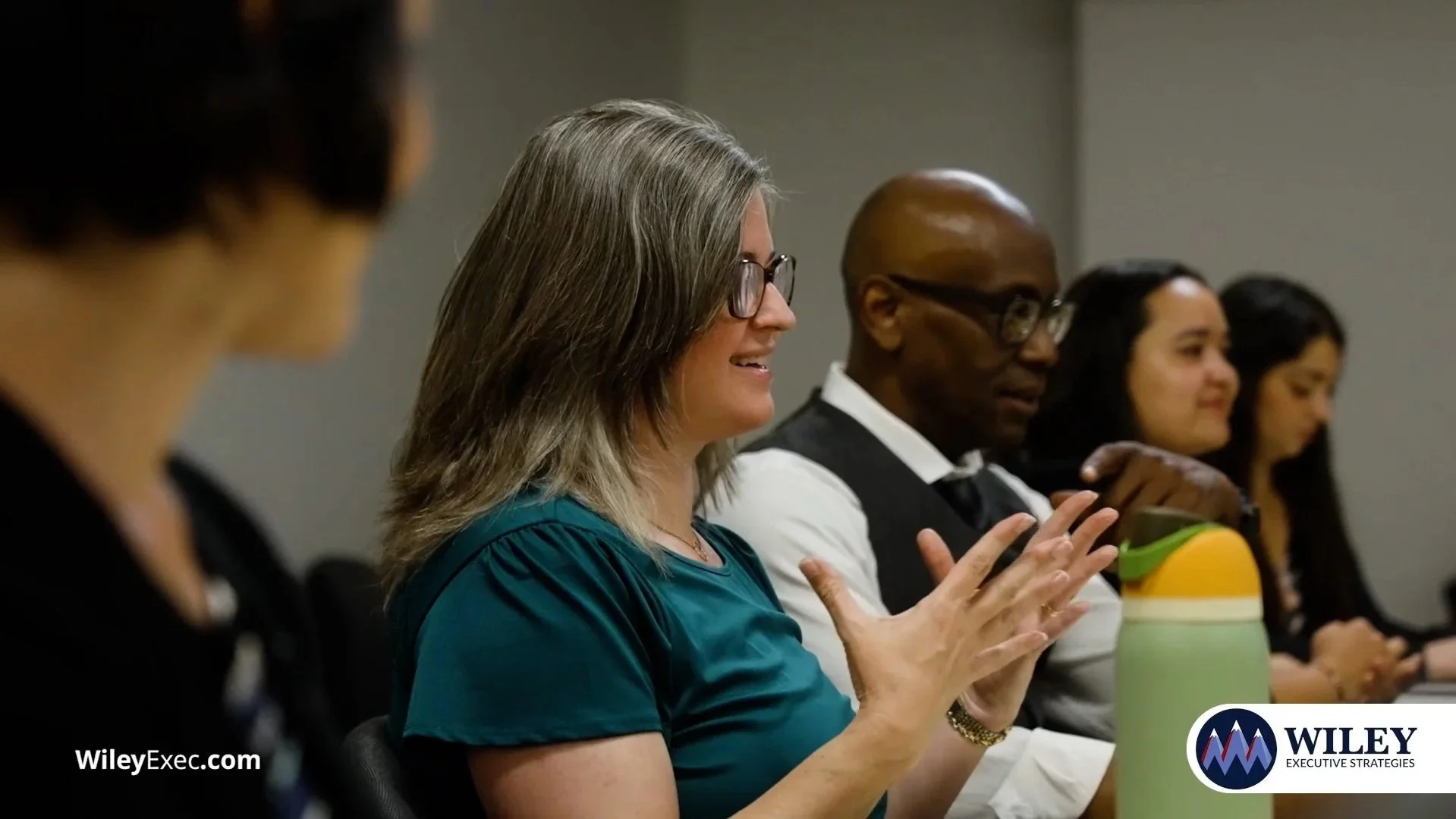
Collaborative Team Discussion
Stepping in as Interim CEO, I feel those stakes on day one. I walk into a room full of dedicated, mission-driven people who are exhausted by transition. The organization might be facing an unexpected leadership departure, a sudden shift in funding, or the growing pains of rapid scaling. Organizational change creates uncertainty, leaving everyone looking for solid ground.
In those moments, a steady presence is what the team needs most.
When an organization experiences a shock to the system, the instinct is often to move faster. Leaders want to make quick decisions, send out immediate communications, and try to outrun the uncertainty. That urgency is understandable. Speed without structure, however, usually exacerbates the anxiety.
Calm leadership is the presence of clarity. It is the intentional choice to slow down just enough to ensure that the next step is grounded in the organization's strengths and values, so that the team can move forward together with confidence.
“The most powerful tool a leader has during a transition is the ability to create a container where the right answers can be found together.”
______________________________________________________________________________
When navigating a high-stakes transition, I rely on three foundational practices to bring stability back into the room.
1. Name the Reality
In the absence of clear information, people will fill the silence with their own narratives. Naming the truth clearly is almost always less disruptive than the uncertainty that grows when leaders wait for the perfect moment to communicate. The first step in stabilizing a team is to name exactly where the organization stands, with honesty and transparency. Acknowledging the difficulty of a transition validates the team's experience and builds trust. You do not need a complete roadmap. The very nature of change means that the road ahead is not yet clear. You simply need to be honest about where you are starting.
2. Protect the Core
During a season of change, it is tempting to try to address everything at once. Steady leadership requires the discipline to focus on what matters most right now. Identify the two or three operational priorities that keep the mission moving forward. Giving the team that clarity also gives them permission to set aside the things that can wait. This focused alignment protects both the organization's momentum and the staff's wellbeing.
If everything is urgent, nothing is urgent.
3. Lead from the Center of “We”
Mission-driven organizations are inherently relational, and that is one of their greatest strengths. The most sustainable path through a transition is built with the people who do the work, drawing on their knowledge, experience, and commitment. When leaders design solutions collaboratively, the team moves from a dynamic of managing change to one of shared ownership. That shift makes all the difference in how change lands and how long it holds.
Before your next executive team meeting or board discussion, take a moment to sit with this question:
How are we building the structure to walk through this transition together?
Wherever you find the opportunity to strengthen that structure, that is a good starting point.
Change is a constant in the lifecycle of any mission-driven organization, and you do not have to navigate it alone.
If your Board or executive team is facing a leadership transition, a structural shift, or a season of rapid growth, let’s connect.
Warmly,
Michelle